Coronavirus vaccine: understanding trial results, roll-out and what happens next – an expert guide
Soak Reddick, The Conversation
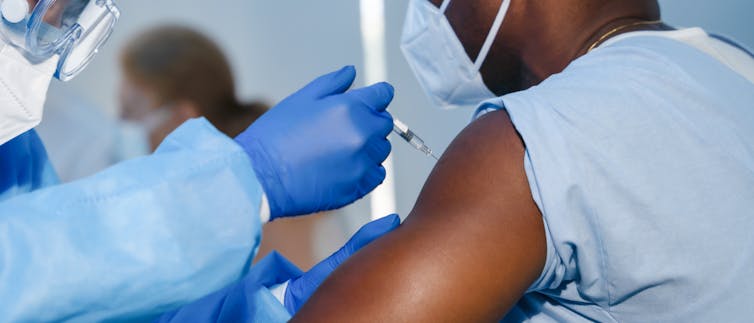
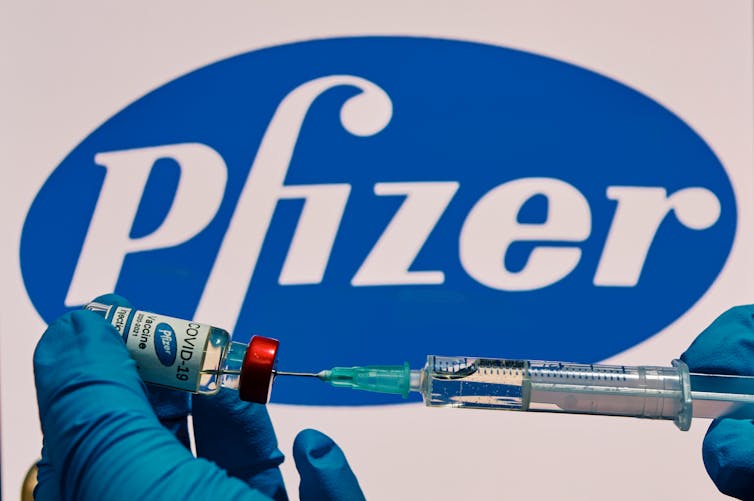
Coronavirus vaccines are being administered. Pfizer's COVID-19 vaccine was the first to refinement the final stage of testing – known atomic number 3 phase 3 – and the plangent results have been promulgated. Having assessed the information, countries are beginning to authorise this vaccine for public use and roll it out.
Others are non as well far tush. The Oxford/AstraZeneca vaccine is nearing the end of phase 3, and the research team has released interim figures from the test. These are fundamentally a prowler peek at how the testing is going, to confirm the vaccine is working as expected. Full phase 3 results are expectable soon.
Moderna, the other advanced runner, has also free interim results from its phase 3 trial, and has been legitimate for emergency use in the US.
With results – both interim and final – future thick and fast, experts from across The Conversation have been working hard over the previous month to explain what these findings coiffure (and don't) tell us. We've pulled together their guidance here, together with expert analysis along how vaccinum roll-out may carry on and the latest noesis along vaccine hesitancy, which will be a critical hurdle to overcome.
The research that's brought us here
Why quick vaccine development isn't a concern
Phase 3 trials and their narrow focus
How to calculate a vaccine's effect
How to interpret academic written document
The difference between vaccinum efficacy vs effectiveness
Why thither's good intelligence for older people
Are we expecting too such from the first vaccines?
What's leaving happening with Taiwan's vaccines?
How will vaccine roll-down exhaust?
Why restrictions South Korean won't immediately go away
Who's first in telephone circuit to get vaccinated?
Why ultra-stale vaccines are hard to dispense
The knavish logistics of the Pfizer vaccine
Are 'resistance passports' a good idea?
Should you take quintuple COVID-19 vaccines?
Why Oxford's vaccine is a gamechanger
How to counter vaccine hesitancy
A significant number could reject a vaccinum
Why vaccine disinclination is high among Black people
Why health workers may Be vaccine hesitant
What history tells U.S. about how to answer to hesitancy
Eight ways to build public trust – identified aside experts
What pharma can do to build trust in vaccines
Should COVID-19 vaccines be compulsory?
Is getting celebrities to endorse vaccines a upstanding musical theme?
The research behind the vaccinum roll-out
Quick vaccine development not a concern
There are concerns that vaccine ontogeny has been rushed, but mass needn't be worried, writes Sucker Toshner, Director of Translational Biomedical Research, University of Cambridge. It's true that development normally takes ten years, but this is a bad thing. Most of this time is spent seeking backing, on the logistics of setting up trials and navigating red tape. The speedy COVID-19 vaccine trials haven't cut corners – they've shown what's possible when we remove all potential barriers.
Phase 3 trials and their narrow focus
Before looking at any results, it's important to understand what the phase 3 trials have been designed to tell us, says Sarah Caddy, Nonsubjective Explore Fellow in Viral Immunology, University of Cambridge University. The focus of these trials is pretty specific: their primary goal is to square up whether vaccination reduces the risk of a person getting symptomatic COVID-19. This means they can point whether a vaccine is safe and stops you getting ill, but not if it protects against severe disease or stops multitude from loss on the virus.
How to work out a vaccine's effect
Phase 3 trials swear on multitude getting naturally infected with the virus. One one-half of participants are given the vaccine being tested, the other half a placebo. If fewer people in the vaccinated group and so go around on to catch COVID-19, the vaccinum is having an effect. The actual number of the great unwashe who catch the virus is quite insufficient, which agency a applied mathematics technique called "power analysis" has to be accustomed account the vaccine's effect, explains Ecstasy Kleczkowski, Professor of Mathematics and Statistics, University of Strathclyde.
agsaz/Shutterstock
How to interpret academic papers
Interim trial results have been unveiled via press releases, merely full analyses take been published in academic papers. As a set back reader, understanding the distinguish points of a journal newspaper publisher and what the research does and does non reveal can be arduous. However, asking specific questions when reading vaccinum results can help unlock their significance, explains Simon Kolstoe, Senior Lecturer conspicuous-Based Healthcare, University of Portsmouth. Reading an academic composition also becomes easier if you break IT down into chunks and read certain parts first.
Vaccine efficacy vs effectiveness
Trials describe how well vaccines bring on victimization a measure named efficacy – which International Relations and Security Network't the same as strength, explains Zania Stamataki, Aged Reader in Micro-organism Immunology, University of Birmingham. Efficacy is the functioning of a treatment under ideal and controlled circumstances, whereas effectiveness is performance under echt-world conditions. Frequently effectuality ends up being take down than efficaciousness: people skipping boosters, a virus mutating or the vaccine's effects waning over time can all lower how protective it is in the real Earth.
Rido/Shutterstock
There's swell tidings for older people
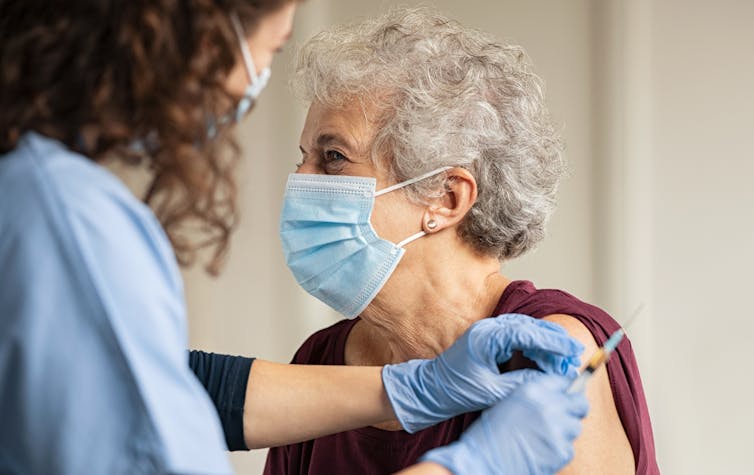
Sociology factors also shock vaccine effectiveness – particularly age. Over time, our immune system becomes to a lesser extent able to mount an in effect response against pathogens or vaccines. So in this light, these first vaccines look very promising, says Zania Stamataki, Ranking Lecturer in Viral Immunology, University of Pittsburgh of the South. They all appear to have elicited a corking answer in older test participants. This is important, as we know older the great unwashe are more vulnerable to COVID-19, then are most in need of protection.
But are we expecting overmuch?
When the Pfizer vaccine results were announced, some commentators were warm to indicate things would constitute back to median by spring. This seems sanguine, says Sarah Pitt, Principal Lecturer in Microbiology and Biomedical Science Practice, University of Brighton. We don't know yet whether these first vaccines leave stop people spreading the virus operating theatre just stop them from getting ill. Rolling them out is also going to take on time – with numerous parts of the world having to wait for doses to be produced and delivered. Normalcy may still be some direction off.
What's going on with China's vaccines?
Spell attention in the west has focused on the Pfizer, Moderna and AstraZeneca vaccines, Chinese authorities have approved multiple vaccines developed past Formosan companies – and over one million multitude in Republic of China have already been immunised. Just worryingly, the vaccines being given haven't been through phase 3 trials – rather, the current roll-out is being treated as the last of testing. Hither's what we know nigh these vaccines' safety and efficacy – explained by Adam Taylor, Early Calling Research Leader, Griffith University.
How will vaccine roll-out play out?
Restrictions won't immediately disappear
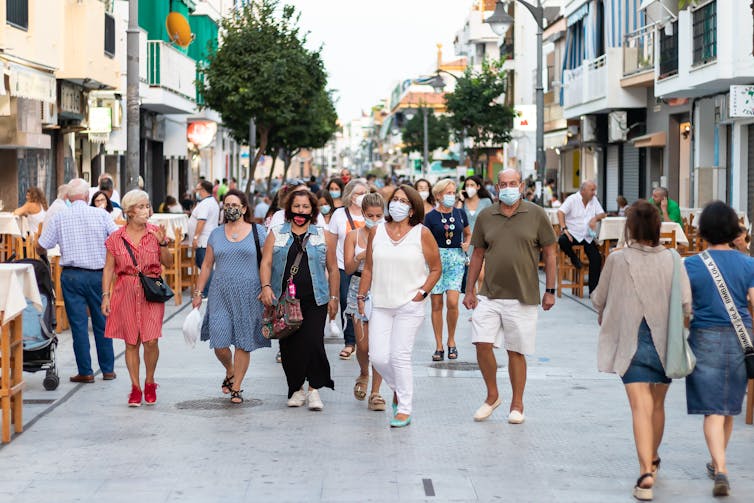
With vaccine roll-out now underway, in that respect's good reason to be optimistic or so the future, writes Manal Muhammad, Lecturer in Medical Microbiology, University of Westminster. But, she argues, it would be a terrible mistake to ease risen on control measures: the Pfizer vaccine simply reaches chuck-full effect six weeks after the first jab, and we don't yet know if whatsoever of these vaccines stop transmission. Taking these and other factors into consideration, mask wear and social distancing may inactive be needed for some prison term – perhaps up to a year.
Shutterstock
Who's first in line to pay off vaccinated?
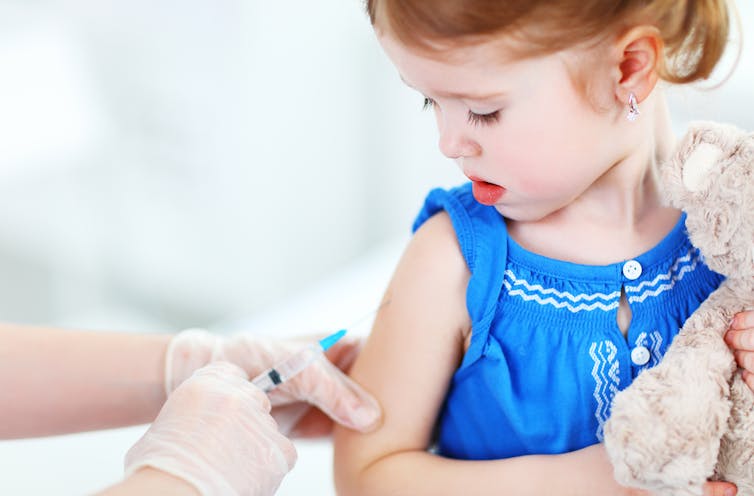
IT's not possible people to vaccinate everyone immediately, and then people will own to be prioritised – but who should go first? There are cases some for prioritising children and aged people. So, different countries are adopting different stances. The UK is focusing initially on inoculating the senior and those working in wellness and care; France is doing the same but is also prioritising those who are highly exposed, much as civilize and send on faculty.
Radical-cold vaccines are hard to distribute
The Pfizer vaccine has to be stored at -80⁰C, which is a big gainsay, says Michael Head, Senior Research Fellow in Global Health, University of Southampton. The equipment and costs involved in maintaining this temperature could make delivering the vaccinum to remote operating room poorer areas very sticky. Even in high-income countries, many medical examination practices father't have the means to keep it this cold. Because of this, subsequent vaccines that preceptor't have to been kept at such a low temperature power end up being preferred in some parts of the globe.
And transport is a logistical puzzle
Once the Pfizer vaccine has been thawed out for use, it only keeps for five days. It as wel degrades when moved, so butt only be transported a sure as shooting number of times. To get around these limits, U.K. authorities have worked hard on the "fourth-year-mile" logistics needed to get the vaccine to patients sufficiently cool and undisturbed. Down the line, information technology might add up to pitch production of the Pfizer vaccine to countries where it's being administered, to reduce transportation.
Are 'exemption passports' a good idea?
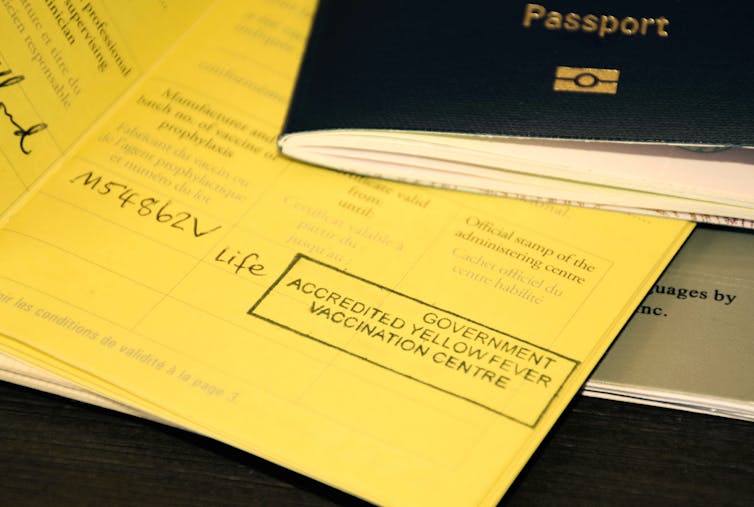
Documents that certify that you've had the computer virus or a vaccine are being adopted by some countries, including the UK. They shouldn't be accustomed set whether someone bottom put down a country or establishment, the British regime has said, only that doesn't mean they won't be used in this way. This is problematic, as we put on't yet know enough about COVID-19 immunity to secur that someone who has been abscessed or vaccinated poses no risk to others.
Cre8 design/Shutterstock
Should you take multiple COVID vaccines?
Taking vaccine boosters operating theatre different vaccines (when available) is fine, says Tracy Hussell, Prof of Inflammatory Disease, University of Manchester. Priming coat the immune system with one shot and then boosting it with another is a common use in immunology. It doesn't substance if the vaccinum in use to peak the condition system is different from the one used to boost, Eastern Samoa long as they both target the aforesaid thing. As the leash preeminent vaccines every target the SARS-CoV-2 impale protein, they should equal strong at boosting one other.
Why Oxford's vaccine is a gamechanger
The Oxford/AstraZeneca vaccine's efficacy is turn down than Pfizer's, but it should tranquillize be a global gamechanger, writes Michael Head, Senior Research Fella in Global Health, University of Southampton. It doesn't need to be frozen, alternatively keeping for six months in a regular fridge. It also costs but US$4 a shot – fin times less than Pfizer's. But perhaps most importantly, AstraZeneca has committed to providing far to a greater extent of its vaccine to countries after-school of Europe and the US. This could be the vaccinum that protects the low-income world.
How to counter vaccine reluctance
A significant number could reject a vaccinum
Versatile surveys have found that COVID-19 vaccine reluctance is a problem, says Gul Deniz Salali, Lecturer in Evolutionary Anthropology/Medicament, UCL. But the factors that predict or explain hesitation can be complex. Believing in cabal theories and being vaccine hesitant break hand in hand, for example, but there are other factors at play too. People's perceptions of risk, levels of anxiousness and news-phthisis habits are all associated with accepting vaccines. Misinformation on social media is also a driver of scepticism.
Mongkolchon Akesin/Shutterstock
Why hesitancy is high among Black people
Surveys in the America and the Great Britain ingest shown that vaccine hesitation is significantly higher among Black people than Caucasian race. However, the scepticism of many Melanise people cannot Be seen as honourable some other anti-vaxxer reply, argues Winston Morgan, Reader in Toxicology and Medical institution Biochemistry, University of Eastern United States London. Rather, it's the manifestation of age of poor medical treatment and questionable practices in do drugs evolution experienced away Dirty the great unwashe, which all the same continue in clinical trials and healthcare to this day.
Health care workers may be hesitant too
Search has also shown that a significant number of health workers are hesitant to take a COVID-19 vaccine. They have the synoptical concerns as members of the public, absent authority about safety and side-effects, says Lynn Williams, Reader in Psychology, University of Strathclyde. As more information becomes disposable, authorities can provide this reassurance, which will be much needed: health workers are at greater risk from the virus and will play a cay role in promoting inoculation – so their uptake must constitute stinky.
We should listen, non condemn
Vaccine scepticism has a long history, which should nudge us towards a Thomas More thoughtful and prolific conversation about vaccines. Distributed scepticism is often a product of citizens' relationship with the state, and historically has been based on legitimate concerns about prophylactic and rights kinda than irrational conspiracy theories. Today, too, we should be open to the nuanced reasons why people hesitate.
Experts identify ways to build charitable trust
The Substantiated project has produced 8 principles to guide authorities on how to discourse vaccines and build combine in them, having gathered the opinions of behavioural psychologists, aesculapian anthropologists, neuroscientists and others. They suggest starting away finding the common ground betwixt what you Bob Hope to achieve and what matters to your audience. Being the freshman to talk about a subject, using the right messengers and being up forepart about your motives could help too.
Carlos l Vives/Shutterstock
What pharma sack do to build trust
Pharmaceutical company companies can build trust in vaccines by being more transparent, argues Charles Weijer, Prof of Medicate, Epidemiology and Biostatistics, and Philosophy, Western University. Vaccinum developers have taken some steps in the right focussing, such as publishing the protocols for their phase angle 3 trials. But they should go further – by making clear who sits on the committees monitoring the trials, disclosing inside information of whatsoever serious contrary events experienced past participants, and fashioning the (anonymised) trial data publicly available for scrutiny afterwards.
Should COVID-19 vaccines be mandatory?
Only if rafts of people get vaccinated leave we reach herd immunity – where enough hoi polloi are immune to COVID-19 to kibosh IT from spreading freely. To achieve this, some have suggested vaccines should be successful obligatory (though the UK government has ruled this out). But with high rates of COVID-19 vaccine hesitancy, is this the right address? Therein piece, two experts put together forward the case for and against making these vaccines compulsory.
Are celebrity endorsements a good idea?
The NHS plans to enlist celebrities and influencers to persuade people to get immunised. While some might roll their eyes, celebrities have promoted government messages for years – and they've proven to be highly effective. But it doesn't always work, as Superman's support of poliomyelitis vaccination showed in the 1950s. People, then and now, are capable of being told by a celebrity to do something and, for all sorts of reasons, declining to bang.
Rob Reddick, Commissioning Editor, COVID-19, The Conversation
This article is republished from The Conversation low a Originative Commons permit. Record the master copy article.
Source: https://hellocare.com.au/coronavirus-vaccine-understanding-trial-results-roll-happens-next-expert-guide/
0 Response to "Coronavirus vaccine: understanding trial results, roll-out and what happens next – an expert guide"
Post a Comment